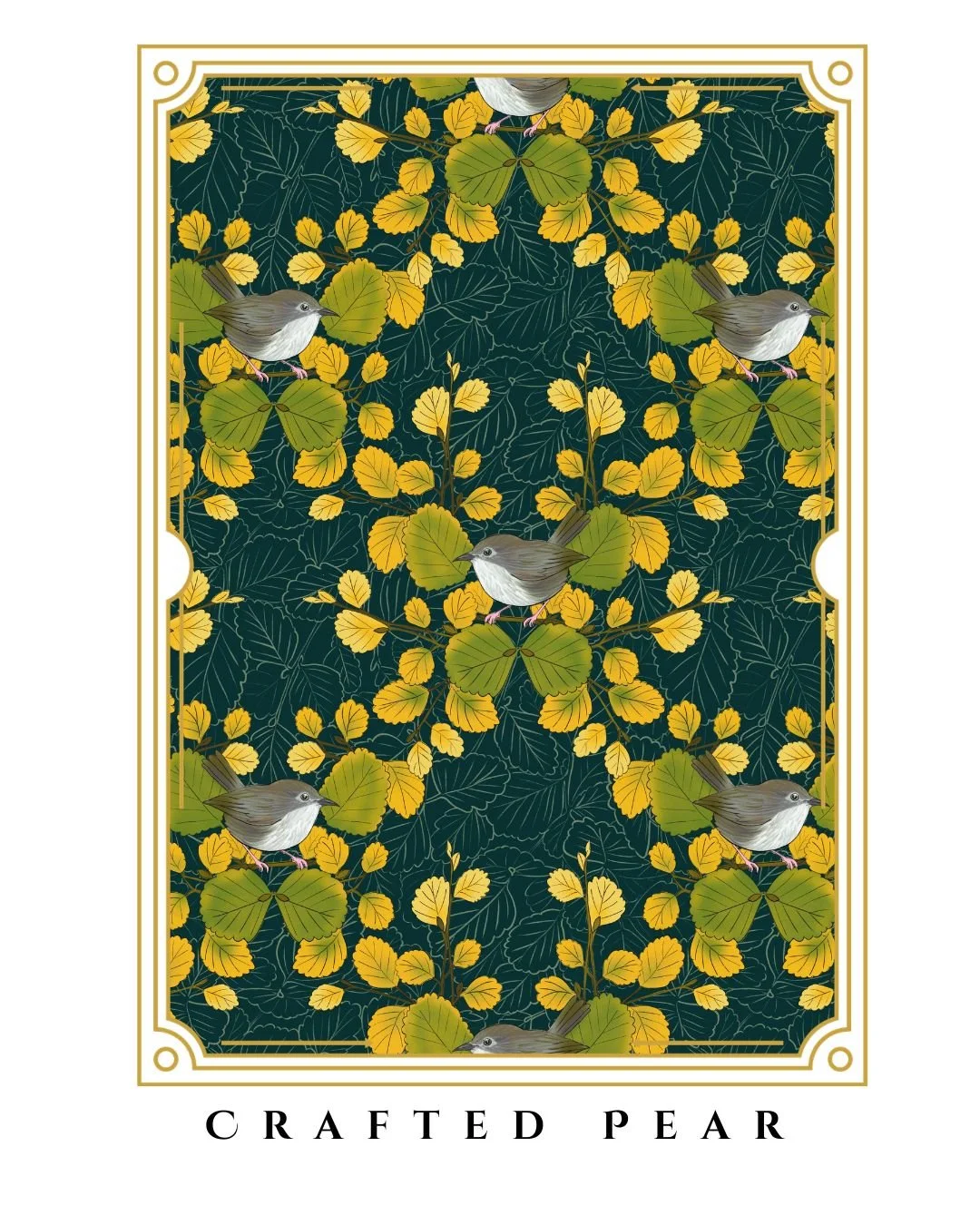
Order from Chaos
Fagus, William Morris and the Making of a Tasmanian Pattern Collection
A Spiritual Moment on a Tasmanian Mountain
I don’t have many truly spiritual moments in my life, but the ones I do have always come from ancient places and the natural world. Standing in a Myrtle Forest in north-east Tasmania. Watching the light change at Ubirr in Kakadu. The stillness of Plitvice Lakes in Croatia. The weight of the Acropolis. These are the moments that stop me completely.
Fagus is on that list now.
Stu and I had wanted to see the autumn colour change of Tasmania’s deciduous beech for years — we’d talked about it the way you talk about things you really mean to do but somehow never quite get to. This April last year we finally went. We set out from Lake Dobson car park at Mt Field National Park, walked for two hours up toward the valley, and I could see it in the distance — a sea of yellow below us in the fold of the hills. And then my back gave out and we had to turn around.
On the drive back down the mountain, almost as a consolation, we spotted a small sign on the side of the road. Woodlands walk. Fifteen minutes, it said.
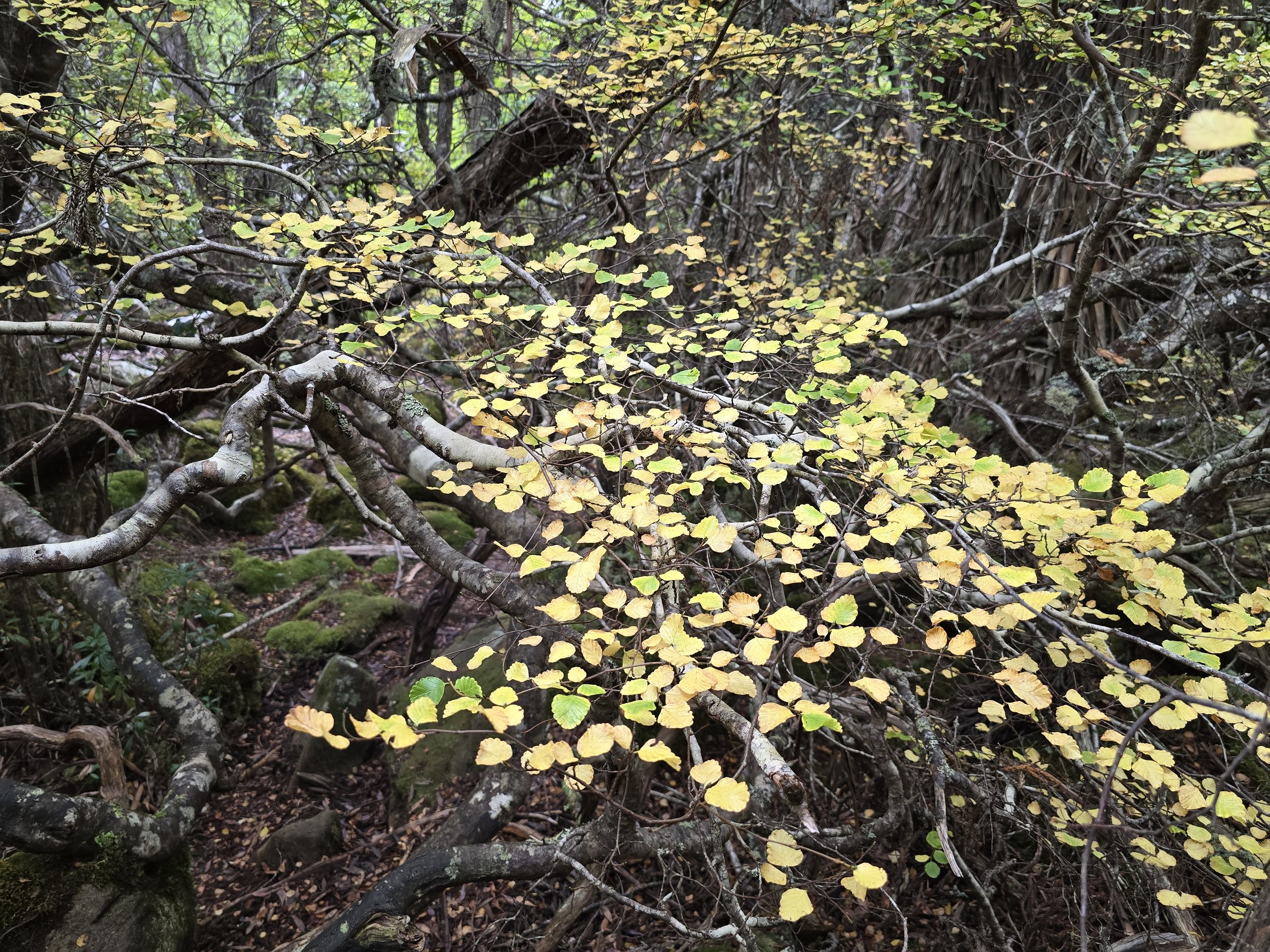
Fifteen minutes later, I was standing in a rainforest gully with fagus all around me.
Inside the Forest
To get to them we had to crawl through the hollow of an old fallen tree — and somehow that felt right. Like the forest asking you to come in properly, on its terms.
Rainforests are my favourite places on earth. The smell of them, that deep green dampness. The way dappled light comes through the canopy and makes everything feel cathedral-like. Birds somewhere in the middle distance, water moving over stones. Mt Field’s rainforest had all of that, and then, tucked inside it, this small colony of fagus.
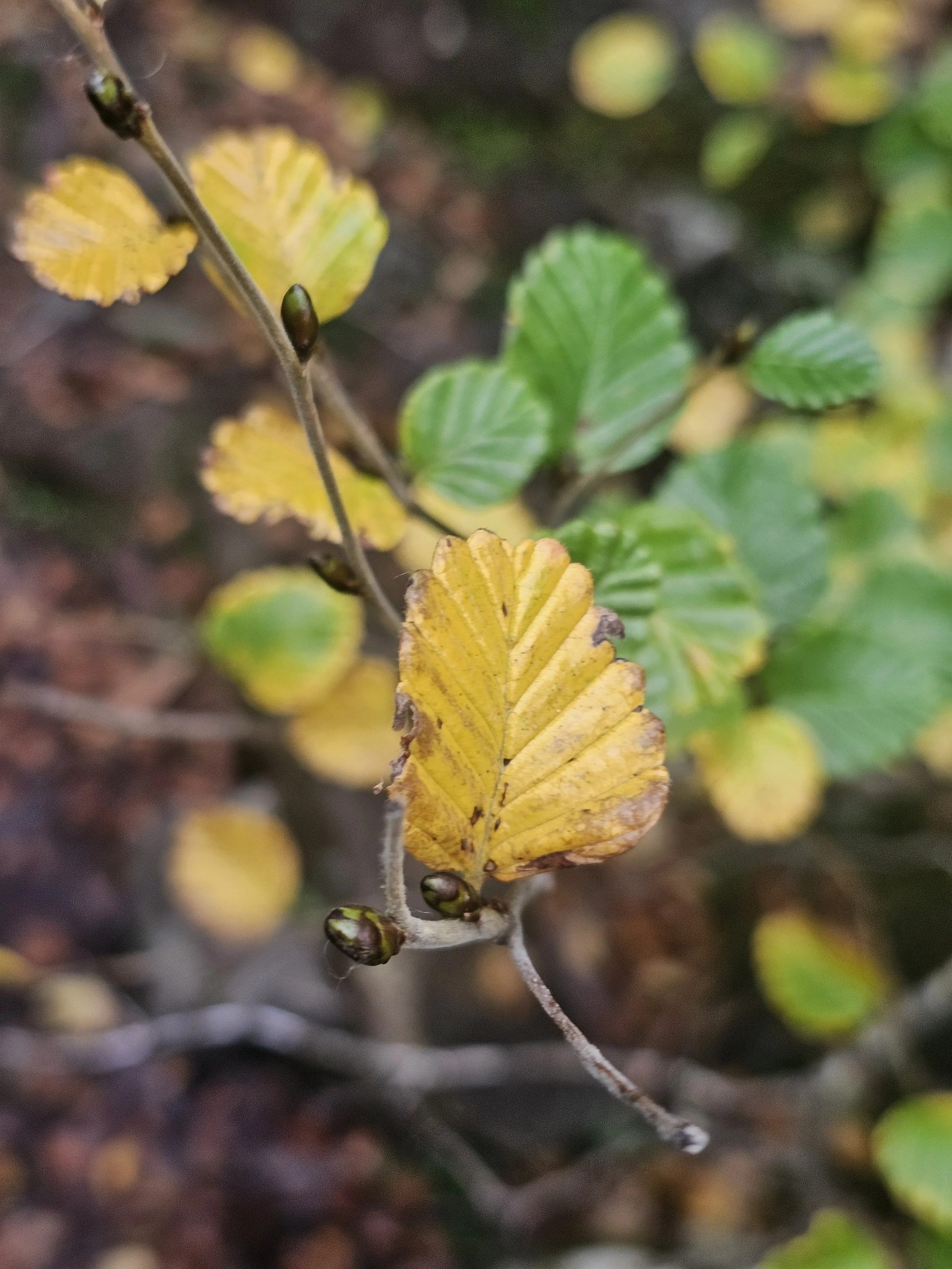
The leaves were smaller than I expected. I don’t know quite why — perhaps because the colour change is so dramatic when you see it across a whole valley that you imagine something grander up close. But there is a real strength to them. Small and decided. Very Tasmanian, when I think about it.
The Plant and the Bird
My partner Stu is a cartographer. He has spent years mapping Tasmania — its mountains, its valleys, its remote and rarely visited places. He has been telling me about fagus for as long as I can remember, building a picture of it slowly the way he builds a map, detail by detail.
So when I stood in that rainforest gully finally seeing it for myself, I wasn’t entirely without context. I knew that Nothofagus gunnii — the scientific name for Tasmania’s deciduous beech — is the only truly deciduous tree native to Australia. I knew it was ancient, a remnant of Gondwana, that it has been growing on this island for millions of years before humans arrived to notice it turning gold in April.
We heard the scrubwren before we saw them — that bright insistent call threading through the rainforest. The Tasmanian Scrubwren, Sericornis humilis, endemic to this island just as the fagus is. Small brown birds, quick and alert, completely at home in the understorey.
From the Forest to the Studio
When we got home, Stu looked at my photographs and said simply — that would make a beautiful pattern. He has been excited about this collection ever since, checking in on its progress the way he checks a map for new detail.
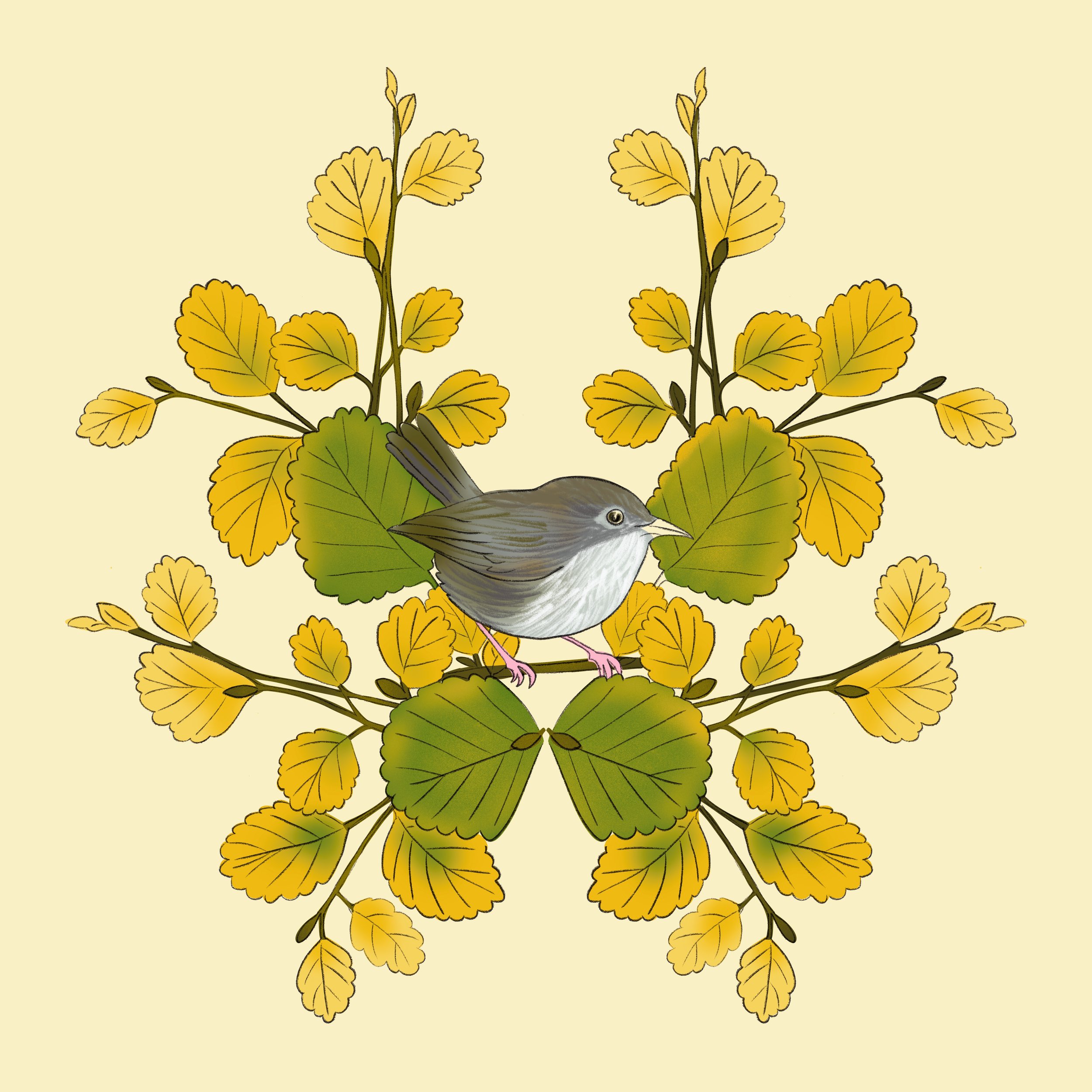
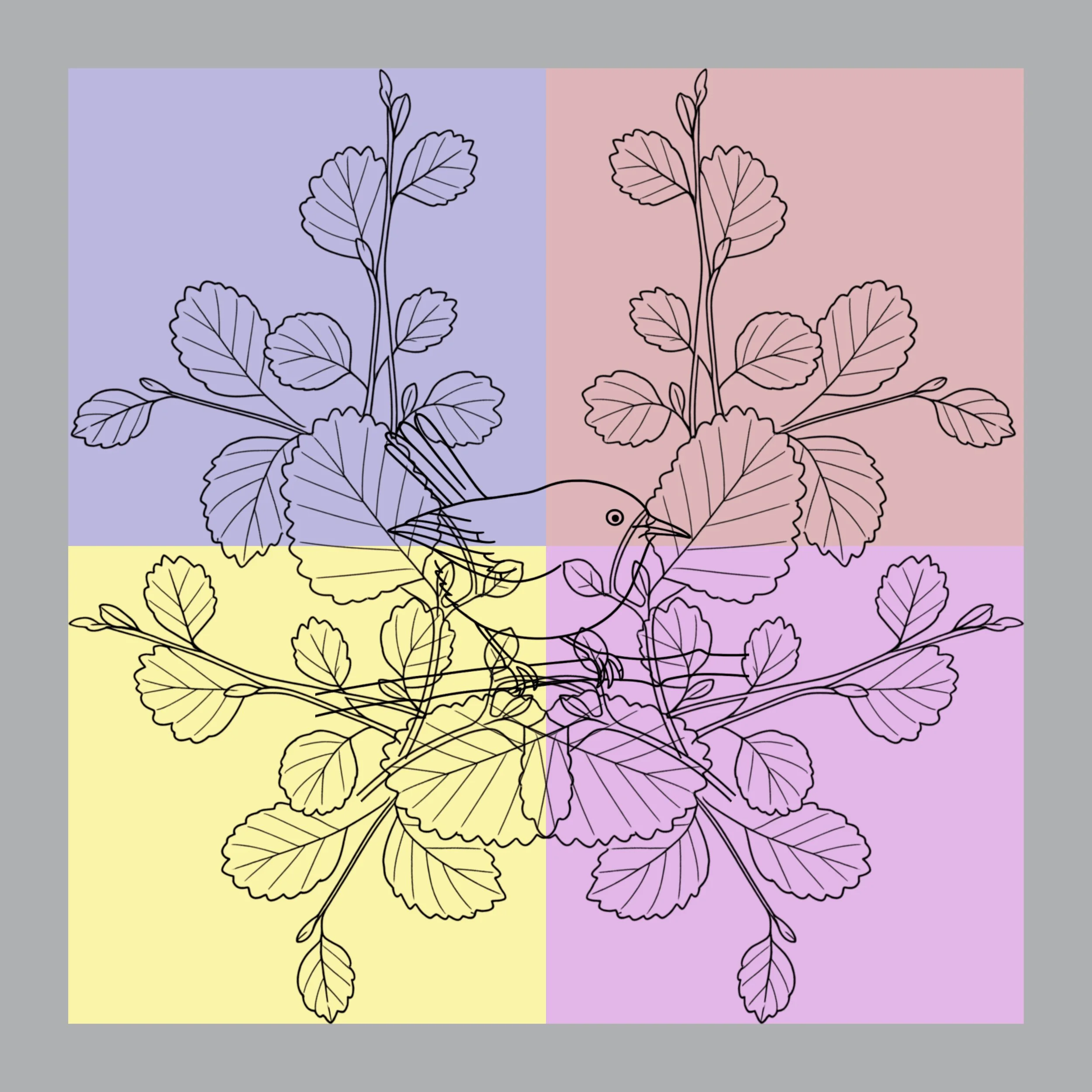
I got out my art journal and started sketching. The fagus leaf is a gift for a pattern maker — that rounded shape, the scalloped edge, the beautiful fan of veins radiating from the stem. Small and decided, as I said. Strong lines, clear form, endlessly repeatable.
It was my sister Kate who pointed me toward William Morris. And that suggestion changed everything.
Discovering William Morris
I had been researching pattern making traditions when I first noticed the connection — the way my own instincts were pulling toward something that had a name and a history. William Morris. And then I visited my sister Kate and there on her shelf were Morris print mugs — the Strawberry Thief, that famous pattern of birds stealing fruit from a garden. It had been in my world all along without me knowing it.
William Morris believed in bringing back traditional trades, in valuing the handmade, in rejecting the mass produced. He believed in finding beauty in everyday objects and drawing inspiration from the nature immediately around him. When I read about him I thought — we would have gotten on really well.
His values resonate with me deeply, and not just historically. I think the world is turning back toward these things right now. There is a growing hunger for the handmade, for work that comes from a specific place and a specific person, for objects that carry a story.
I won’t pretend I work exactly as Morris did. I sketch by hand and I observe closely, but I use Procreate and digital tools to build my patterns. I think of myself as a modern maker in his tradition — not nearly as talented, but working from the same instincts. Inspired by the nature around me, trying to make something beautiful for everyday life, and caring deeply about the integrity of the work.
Order from Chaos
Over the past month, making this collection, I found myself asking a question I hadn’t thought to ask before — why do I love patterns so much? Why does a great pattern give me genuine joy?
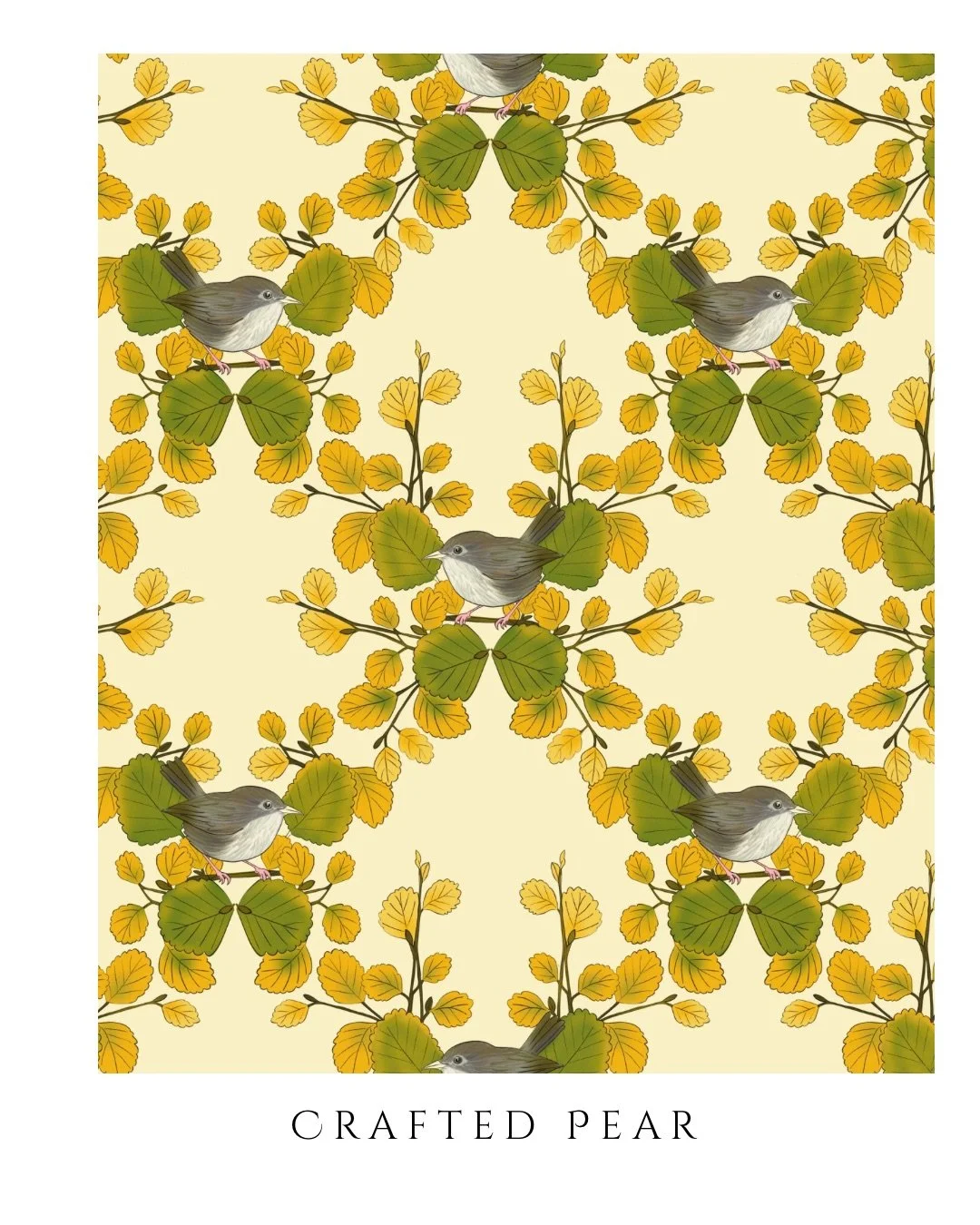
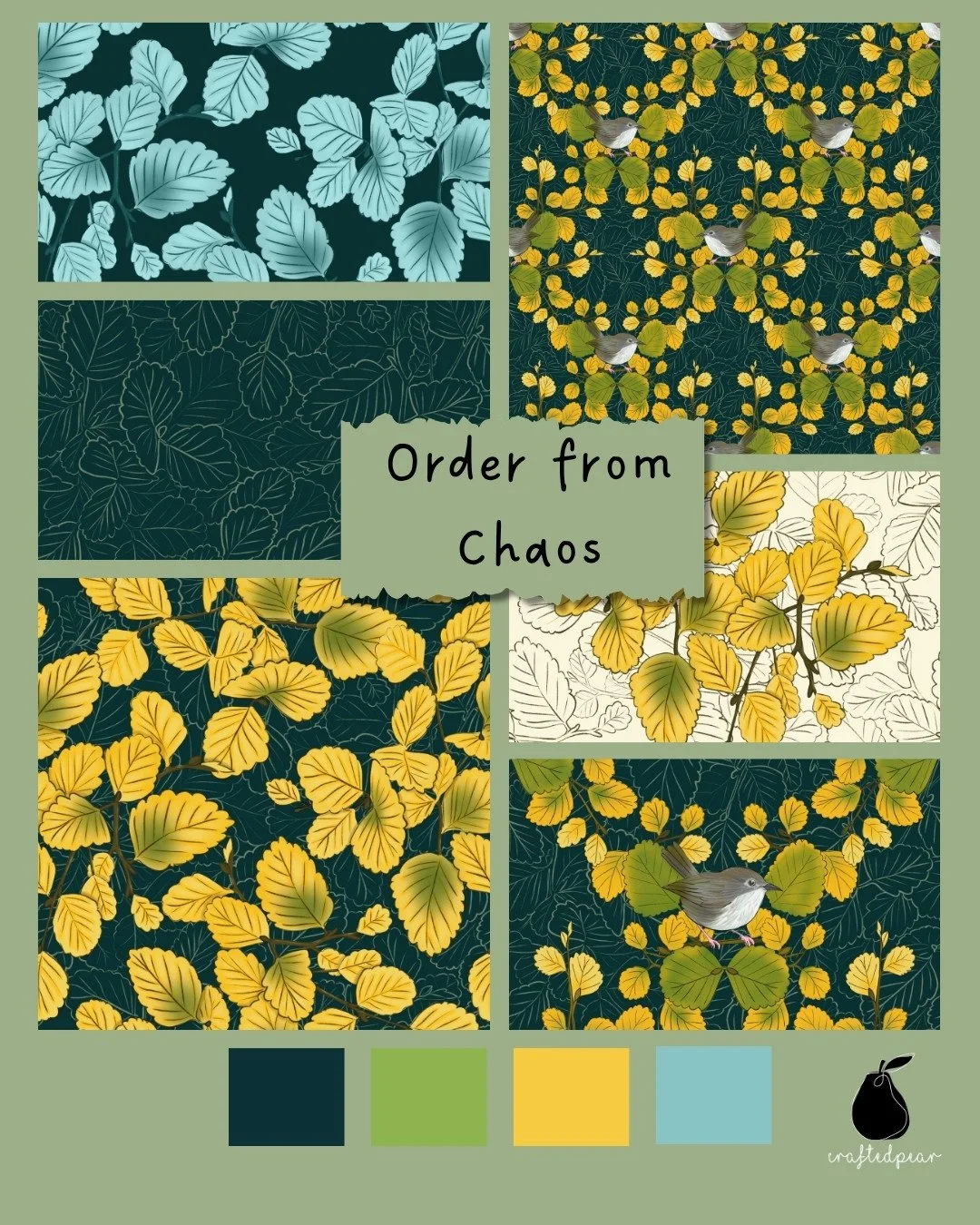
I kept coming back to the same answer. Balance. Rhythm. Order from chaos. The way a repeated motif creates a kind of visual music, a structure that feels both inevitable and alive. And then I discovered that Morris understood this completely — that his mirror repeats, his layered colourways, his interlocking botanical forms were all expressions of exactly this. He was making order from the chaos of the natural world, finding the rhythm inside it.
When I applied that thinking to the fagus — the mirror repeat of the branches, the scrubwren sitting at the centre of that symmetry — something clicked. The pattern felt right because the structure honoured what I love about pattern making itself.
A Place Worth Paying Attention To
This collection began with a bad back and a consolation sign on the side of a mountain road. It began with crawling through a hollow tree and standing up inside a rainforest gully and feeling, unexpectedly, that particular kind of stillness that only very old places can give you.
It became something more than I expected — a conversation with a nineteenth century English designer who I think would have understood exactly why a small Tasmanian tree with scalloped leaves and a tendency to turn gold in April deserves to be taken seriously as a subject for pattern making.
What I hope, when you encounter this work, is that you feel proud. Proud that Tasmania’s ancient natural heritage — its Gondwanan trees, its endemic birds, its rainforest gullies — can be represented with the same care and reverence that William Morris brought to the gardens and hedgerows of England. This place deserves that attention. I believe that completely.